Sheikh Fahd Al-Yousef’s tour restores hope for Kuwaiti farmers
Direct sales and market reforms aim to end monopoly in local agriculture; farmers call for permanent stalls and better oversight to protect national produce
Kuwaiti farmers continue to face a persistent marketing dilemma, caught between government support for local produce and the realities imposed by middlemen and auction systems. This unhealthy equation forces farmers to sell their crops at a loss, while consumers pay higher prices for goods.
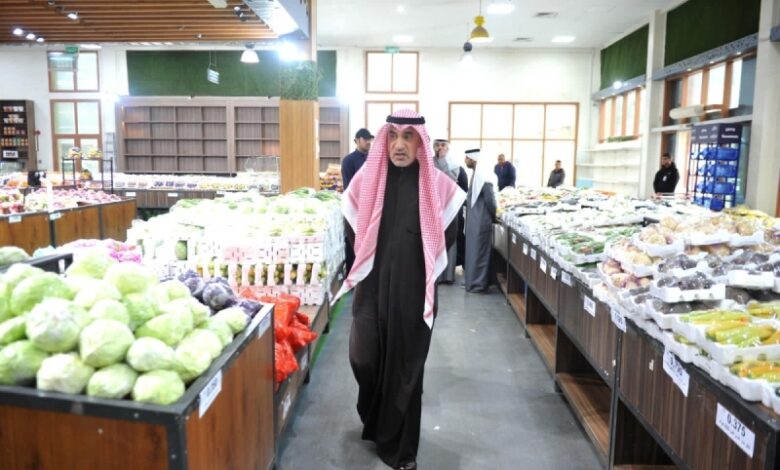
Deputy Prime Minister and Minister of Interior Sheikh Fahd Al-Yousef sought to address these challenges during his tour, on Saturday, of the Farmers Union sites, reopening a long-standing question: Who truly benefits from agricultural support?
The tour sent clear messages emphasizing direct sales channels for farmers, stricter control over violations at sales sites, and confronting suspected corruption in the distribution of agricultural products. Officials aim to restore order to the vegetable and fruit market, ensuring fair access and opportunities for local farmers.
Speaking to Al-Rai, farmer Matar Al-Baghili highlighted the problem of auctions, where limited traders —mostly non-Kuwaitis — buy produce at low prices and resell it to citizens at higher rates, leaving farmers at a loss.
Al-Baghili suggested opening permanent stalls in 146 public parks under the supervision of the Ministry of Commerce, Kuwait Municipality, the Food Authority, and the Public Authority for Agriculture. He emphasized the need for integrated roles among authorities, stricter auction oversight, and direct sales to reduce intermediaries.
Faisal Al-Lafi, a farmer in Al-Abdali, welcomed the return of the Kuwaiti Farmers Union’s sheds to their owners, describing it as a revitalization of farmers’ spirits. He proposed that the Union manage all market stalls directly and purchase farmers’ produce at profitable prices to sell to consumers at fair rates.
Al-Lafi stressed that poor infrastructure, lack of refrigerated storage, and limited transportation currently force farmers to sell immediately at low prices, leaving them vulnerable in a speculative market.
Ahmed Nasser Al-Shabak, Secretary of the Farmers Union, praised Sheikh Fahd Al-Yousef’s reform efforts and the return of sheds to farmers. He announced that the Union plans to maintain and operate the Andalus market from the start of next summer to serve both producers and consumers.
Based on farmers’ statements, seven key challenges define the crisis of local agricultural products in Kuwait:
- Brokers’ monopoly of auctions
- Absence of direct purchasing from associations
- Poor storage and refrigerated transport
- Competition from importers during local season
- High water and electricity costs
- Price fluctuations and lack of transparency
- Weak marketing and limited sales outlets
The recent initiatives aim to address these issues, restore fairness in local agricultural markets, and provide Kuwaiti farmers with the tools and opportunities to thrive.