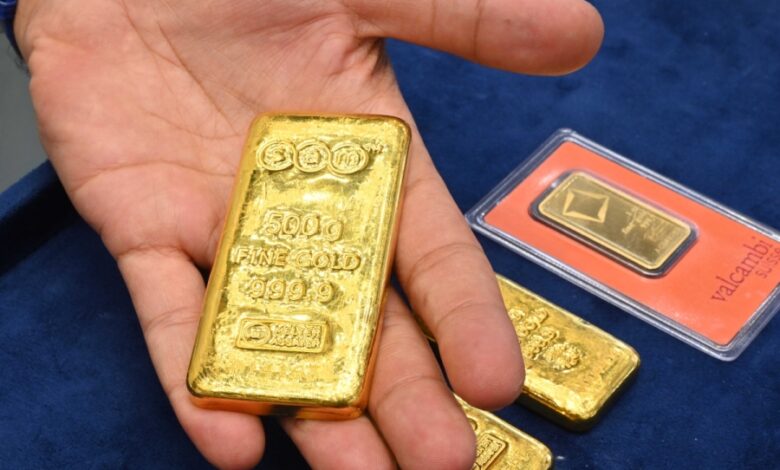
A report by the World Gold Council said that despite gold’s exceptional performance in 2025 — marking more than 50 new record highs and delivering returns exceeding 60% — the precious metal could face headwinds in 2026 if market bets on the economic policies of the US administration under President Donald Trump prove successful.
The Council explained that the effective implementation of these policies could accelerate economic growth and ease geopolitical risks, potentially leading to higher interest rates and a stronger US dollar — factors that traditionally exert downward pressure on gold prices.
The report added that other elements could also influence gold’s trajectory, including weaker central bank demand and developments in gold recycling.
Nevertheless, it stressed that gold’s role as a portfolio diversification tool and a source of stability remains essential amid persistent market volatility.
According to the Council, gold’s record highs in 2025 were underpinned by escalating geopolitical and economic uncertainty, a weaker dollar, and strong price momentum.
Both investors and central banks increased their allocations to gold in a bid to enhance diversification and safeguard portfolios.
Looking ahead to 2026, the report noted that the outlook is forming against a backdrop of continued geo-economic uncertainty.
Under current conditions, gold prices may move within a sideways range, reflecting prevailing economic consensus.
However, the Council cautioned that 2026 could bring new surprises. Gold is expected to post moderate gains if economic growth slows and interest rates decline further, while a sharper global slowdown accompanied by rising risks could trigger stronger performance.
Best-performing assets
The report highlighted that gold emerged in 2025 as one of the world’s best-performing assets, positioning it for its fourth-strongest annual return since 1971. This historic rise was driven by a complex geopolitical and geoeconomic environment, coupled with a broadly weaker dollar and slightly lower interest rates.
It added that subdued bond returns and concerns over equity market valuations prompted a wider shift toward portfolio diversification.
Supported by positive price momentum, investment demand for gold rose sharply across all regions, while central banks maintained robust buying levels — remaining above long-term averages, though below the record purchases seen over the past three years.
Gold price fluctuations
Despite increased volatility accompanying gold’s sharp price rise in 2025, the Council noted that fluctuations remain broadly in line with long-term historical averages and well below levels seen during previous periods of rapid price appreciation. The report emphasized that gold’s movement has remained orderly and disciplined.
It pointed out that elevated macroeconomic and geopolitical risks during 2025 contributed to volatility across asset classes, including major equity indices. However, gold’s long-term behavior has remained consistent and comparable to other growth assets.
The Council concluded that while short-term price surges and heightened trading activity occasionally led to temporary spikes in volatility, conditions quickly normalized — underscoring gold’s resilience as a strategic asset.
In an era of declining traditional diversification benefits, gold continues to play a critical role in reducing overall portfolio risk and providing stability during periods of uncertainty.