Is fentanyl a ‘weapon of mass destruction’; Debate hots up over public health, security
A 2019 study by the Center for the Study of Weapons of Mass Destruction at the US National Defense University has concluded there was no justification for officially designating fentanyl compounds as WMDs. While the study acknowledged a theoretical risk of misuse, it warned against blurring the lines between chemical weapons and narcotics, particularly under international conventions.
US President Donald Trump has designated fentanyl a “weapon of mass destruction” (WMD), a move that has sparked sharp debate among public health experts, security analysts, and policymakers.
The declaration underscores the scale of the opioid crisis in the United States, while raising questions about whether a public health emergency is being reframed as a national security threat.
Announcing the decision, Trump said fentanyl was killing Americans on a scale comparable to catastrophic weapons. “No bomb does what this is doing,” he said, claiming that between 200,000 and 300,000 people die each year from fentanyl-related causes, DW.COM reports.
While the figures cited by the president exceed official data, the death toll remains severe. According to the US Centers for Disease Control and Prevention (CDC), more than 76,000 people died from fentanyl overdoses in 2023, with the number falling to 48,422 in 2024. In Europe, fatalities remain far lower, numbering in the hundreds.
Fentanyl is a synthetic opioid originally developed for medical use, particularly in anesthesia and palliative care for cancer patients. When administered under strict medical supervision, it is considered indispensable for managing extreme pain.
However, its extraordinary potency—many times stronger than morphine—makes it exceptionally dangerous when misused.
Even a few milligrams of fentanyl can suppress breathing to fatal levels. The drug binds to opioid receptors in the central nervous system, dulling pain but also slowing respiration.
In unregulated doses, it can quickly cause oxygen deprivation, loss of consciousness, coma, and death. Its high addictive potential and narrow margin between intoxication and overdose make it one of the deadliest drugs circulating on the illicit market.
Trump’s reclassification fundamentally alters how fentanyl is treated under US law. No longer confined to health and criminal frameworks, it is now regarded as a national security issue.
This opens the door for intelligence agencies and, potentially, the military to play a role in combating fentanyl trafficking, particularly against powerful drug cartels or in scenarios involving deliberate misuse.
However, the decision has drawn criticism. A 2019 study by the Center for the Study of Weapons of Mass Destruction at the US National Defense University concluded there was no justification for officially designating fentanyl compounds as WMDs. While the study acknowledged a theoretical risk of misuse, it warned against blurring the lines between chemical weapons and narcotics, particularly under international conventions.
Legal and security experts have also expressed skepticism. Dennis Fitzpatrick, a former assistant US district attorney, described the move as largely symbolic, arguing that existing laws already give authorities sufficient tools to prosecute traffickers and dismantle networks. Public health specialists echoed this view, warning that the reclassification could further militarize the “war on drugs” without addressing root causes such as addiction, prevention, and treatment.
Critics also caution that the designation may complicate international cooperation, especially with China, which plays a key role in supplying chemical precursors used in illicit fentanyl production. Framing the issue in WMD terms could be perceived as an indirect accusation, potentially straining diplomatic efforts to curb supply chains.
Supporters of Trump’s move, including victim advocacy groups such as Families Against Fentanyl, argue that the sheer scale of deaths and economic damage justifies extraordinary measures. They describe fentanyl as a “weapon of mass destruction in slow motion,” claiming that only the full weight of intelligence, military pressure, and global enforcement can stem the crisis.
Most fentanyl-related deaths, experts stress, are not the result of targeted attacks but of contaminated street drugs. Illegal manufacturers often mix fentanyl into heroin, cocaine, or counterfeit pills, leaving users unaware of the dosage. As little as two milligrams can be fatal, and inconsistent mixing makes overdose risks unpredictable.
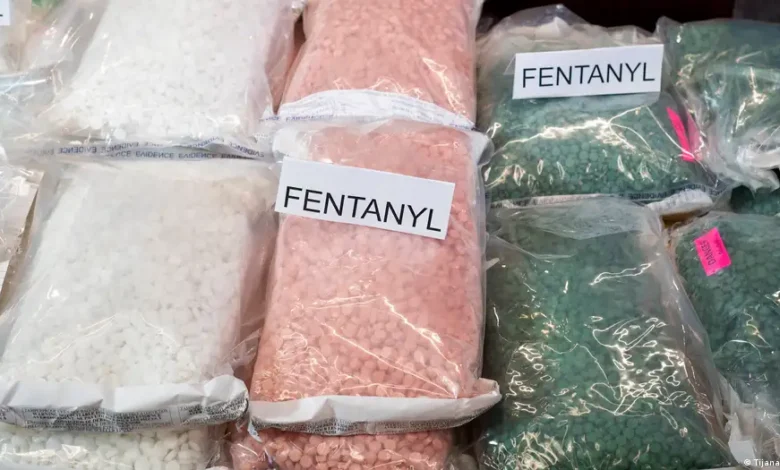
The global fentanyl supply chain is complex. Chemical precursors, often sourced from China, are processed in clandestine laboratories in Central and South America before being smuggled into the United States and Europe. In 2022 alone, the US Drug Enforcement Administration seized more than 50 million counterfeit fentanyl pills and 4.5 tons of fentanyl powder—an amount officials said could have killed every American.
Whether Trump’s declaration will lead to meaningful reductions in overdose deaths remains uncertain. For many experts, the crisis demands sustained investment in prevention, treatment, and social support, rather than symbolic escalation. The debate now centers on whether redefining fentanyl as a weapon strengthens the fight against it—or distracts from the urgent public health response the crisis requires.