IMF sees economic recovery taking hold in Kuwait, forecasts 2.6% growth for 2025
Fund’s assessment underscores cautious optimism for Kuwait’s economic outlook, while emphasizing the importance of sustaining fiscal discipline, advancing structural reforms and strengthening non-oil growth to support long-term economic stability
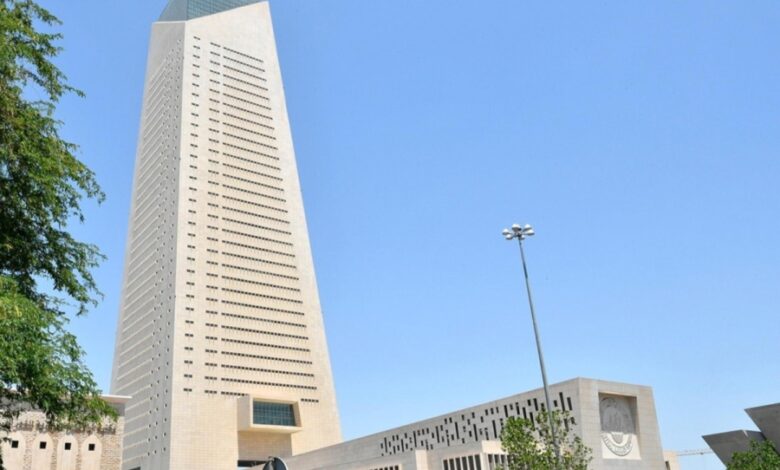
The Central Bank of Kuwait has announced the conclusion of the International Monetary Fund’s (IMF) annual consultation mission to the country, with IMF experts confirming that Kuwait has entered a path of economic recovery in 2025 and projecting real GDP growth of 2.6 percent this year.
In a statement issued on Thursday, the Central Bank said the IMF mission visited Kuwait from December 3 to 17 as part of the Article IV consultations under the Fund’s Articles of Agreement.
The IMF forecast that growth would stabilize at above 2 percent over the medium term (three to five years). The non-oil sector is expected to grow by 2.7 percent in 2025 and 3 percent in 2026, before stabilizing at around 2.7 percent in the medium term, supported by continued economic reforms and diversification efforts, reports Al-Rai daily.
On price developments, the mission noted a continued decline in inflation. Core inflation fell year-on-year to about 2.4 percent in August, and the IMF expects average inflation to ease further to around 2.3 percent in 2025 and 2.1 percent in 2026, before stabilizing near 2 percent in the medium term.
With regard to the balance of payments, the IMF highlighted Kuwait’s strong external position. The current account continued to post sizable surpluses, while external reserves remained robust in 2024.
The current account surplus reached about 29.1 percent of GDP last year, though it is expected to narrow to around 22.9 percent in 2025 and 19.1 percent in 2026, mainly due to lower oil prices.
The mission also pointed to an improvement in public finances despite declining oil revenues. The general budget deficit narrowed to about 2.2 percent of GDP in fiscal year 2024/2025, driven by measures such as rationalizing the wage bill, reducing energy subsidies in line with global fuel prices, and increasing non-oil revenues through higher government service fees.
However, the IMF expects the budget deficit to widen again in the coming years. The deficit is projected to rise to 8.7 percent of GDP, or approximately KD 4.2 billion, in fiscal year 2025/2026, and to 9.4 percent of GDP, or about KD 4.6 billion, in fiscal year 2026/2027, reflecting higher public spending and continued pressure from lower oil revenues.
Overall, the IMF’s assessment underscores cautious optimism for Kuwait’s economic outlook, while emphasizing the importance of sustaining fiscal discipline, advancing structural reforms and strengthening non-oil growth to support long-term economic stability.