Kuwait’s Diwaniya officially joins UNESCO’s list of intangible cultural heritage
A culmination of three centuries of social presence

By Sheikha Suhaila Fahad Al-Sabah
Managing Editor
The Kuwaiti diwaniya has been officially added to UNESCO’s list of intangible cultural heritage, a historic step that embodies the depth of this long-established social institution and highlights its pivotal role in shaping Kuwaiti and Gulf identity for over three centuries. This international recognition not only celebrates a traditional social space but also honors a vibrant cultural system that has successfully preserved its essence despite the passage of time and changing lifestyles.
The diwaniya’s roots trace back to the beginnings of Kuwaiti society, when the urban planning of the old city—with its closely packed houses and narrow alleyways known as ‘sikaik’—necessitated a separate space for men to gather. The first diwaniyas, numbering no more than ten at the time, became the nucleus of a social institution that would later become one of the most prominent features of Kuwaiti society. Initially, the diwaniya was a room attached to the house with a separate entrance, receiving visitors and accommodating those arriving from outside the city, allowing them to stay until their needs were met.
Over time, the diwaniya transformed into an architectural masterpiece, reflecting a profound understanding of the desert environment’s requirements. Its ceiling rose to nearly six meters, and its thick walls were constructed from multiple layers of mud, ash, and matting, providing natural thermal insulation. It was also distinguished by its numerous windows overlooking the road, its spacious seating areas accommodating twenty to thirty people, and the ‘rawashin’ (latticework windows) that adorned the walls and displayed artifacts.
In addition, there was the ‘lujar’ (cooking room) where coffee and tea were prepared, making it the heart and soul of the diwaniya. Throughout history, several diwaniyas have become landmarks in Kuwaiti memory, including the diwaniya of Haj Abdul Nabi Marafi, considered the oldest documented diwaniya dating back to the era of Sheikh Jaber Al-Sabah (Jaber Al-Aish); the famous Boursli family diwaniya, known for its gate specifically for camels; the diwaniya of Abdul Rahman Khalaf Al-Naqeeb, renowned for its association with literature and generosity; and the Al-Asousi diwaniya, established in 1742, which has retained its original spirit and structure.
The role of the diwaniya was not limited to the social sphere; it quickly transformed into an influential political, cultural, and economic platform. The diwaniya of Mulla at the beginning of the 20th century stands out in this context, where Mulla Saleh played a significant media role during World War II by translating BBC broadcasts for the attending politicians and dignitaries. The same diwaniya also witnessed the oil exploration negotiations of the 1930s, negotiations that shaped Kuwait’s economic transformation.
Recent studies have demonstrated the diwaniya’s ability to adapt to rapid changes in Kuwaiti society. A study by British researcher Clemens Chai, published in The Journal of Arabian Studies found that the diwaniya—despite its changing physical form—has retained its social essence, becoming a space that brings generations together, reproduces cultural values, and strengthens social capital through inherited customs of visits and gatherings.
The study also affirmed that attending diwaniyas has become part of the collective unconscious of Kuwaitis, and that they represent a bridge connecting grandparents and parents with their children. Despite the proliferation of social media and the expansion of virtual communities, the diwaniya continues to maintain its vital role. It remains a free space for political and social discussion, especially since it is exempt from the law on public gatherings, making it a platform for expressing opinions and a destination for diverse viewpoints.
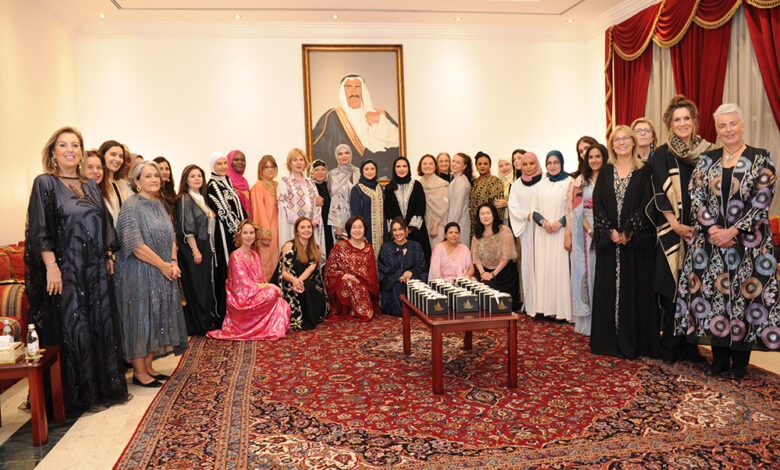
The tradition of diwaniyas has extended to women in recent years, with the emergence of women’s diwaniyas, reflecting the institution’s capacity for evolution and openness. Over the decades, diwaniyas have symbolized the close relationship between the ruler and the ruled in Kuwait. The country’s rulers have traditionally visited the grand diwaniyas on various occasions, affirming a governance approach based on participation and choice, as embodied in the famous saying: “We came to rule by choice… the choice of the people.”
Today, the number of diwaniyas in Kuwait exceeds the number of families, a testament to the depth and entrenchment of this tradition within society. While the concept of majlis (traditional gathering places) is similar across the Gulf, the Kuwaiti diwaniya possesses a unique character that surpasses its counterparts, whether in its social, political, or cultural roles.
Thus, the inclusion of the diwaniya on UNESCO’s list of intangible cultural heritage is not merely a symbolic achievement, but a global recognition of a social institution that has successfully evolved into a vibrant and dynamic space that remains authentic, embodying the values of communication, participation, and openness. It is the story of a heritage that has transformed from a simple architectural necessity into a national symbol and a cultural treasure worthy of international celebration.
A diwaniya is a central social institution in Kuwait and the wider Gulf, with clear aims and objectives rooted in culture, community, and civic life.
Aims of a Diwaniya
Strengthen Social Bonds: To bring family members, friends, neighbors, and community members together, reinforcing relationships and social cohesion.
Preserve Cultural Heritage: To maintain and pass on Kuwaiti traditions, customs, etiquette, and oral history across generations.
Encourage Dialogue and Exchange of Ideas: To provide a safe, open space for discussion on social, cultural, religious, and national issues.
Promote Community Unity: To serve as a unifying forum where people from different backgrounds and viewpoints interact respectfully.
Support Civic Engagement; To function as a grassroots platform for public opinion, civic awareness, and informal political discourse.
Objectives of a Diwaniya
Facilitate Regular Gatherings: Organize routine meetings where members can connect, converse, and exchange news and experiences.
Share Knowledge and Wisdom: Enable the exchange of advice, life experiences, and expertise among elders, professionals, and youth.
Resolve Social Issues Informally: Act as a place for mediation, reconciliation, and problem-solving within families or the wider community.
Celebrate Cultural and Social Occasions: Host gatherings during Ramadan, national holidays, weddings, condolences, and other significant events.
Encourage Respectful Debate: Promote tolerance, listening, and respect for differing opinions within the framework of Kuwaiti values.
Mentor Younger Generations: Provide guidance, role models, and moral support to youth through interaction with elders.
Strengthen National Identity; Reinforce a sense of belonging, patriotism, and shared responsibility toward society and the nation.