Al-Sabah archaeological collection showcased at major international exhibition in India
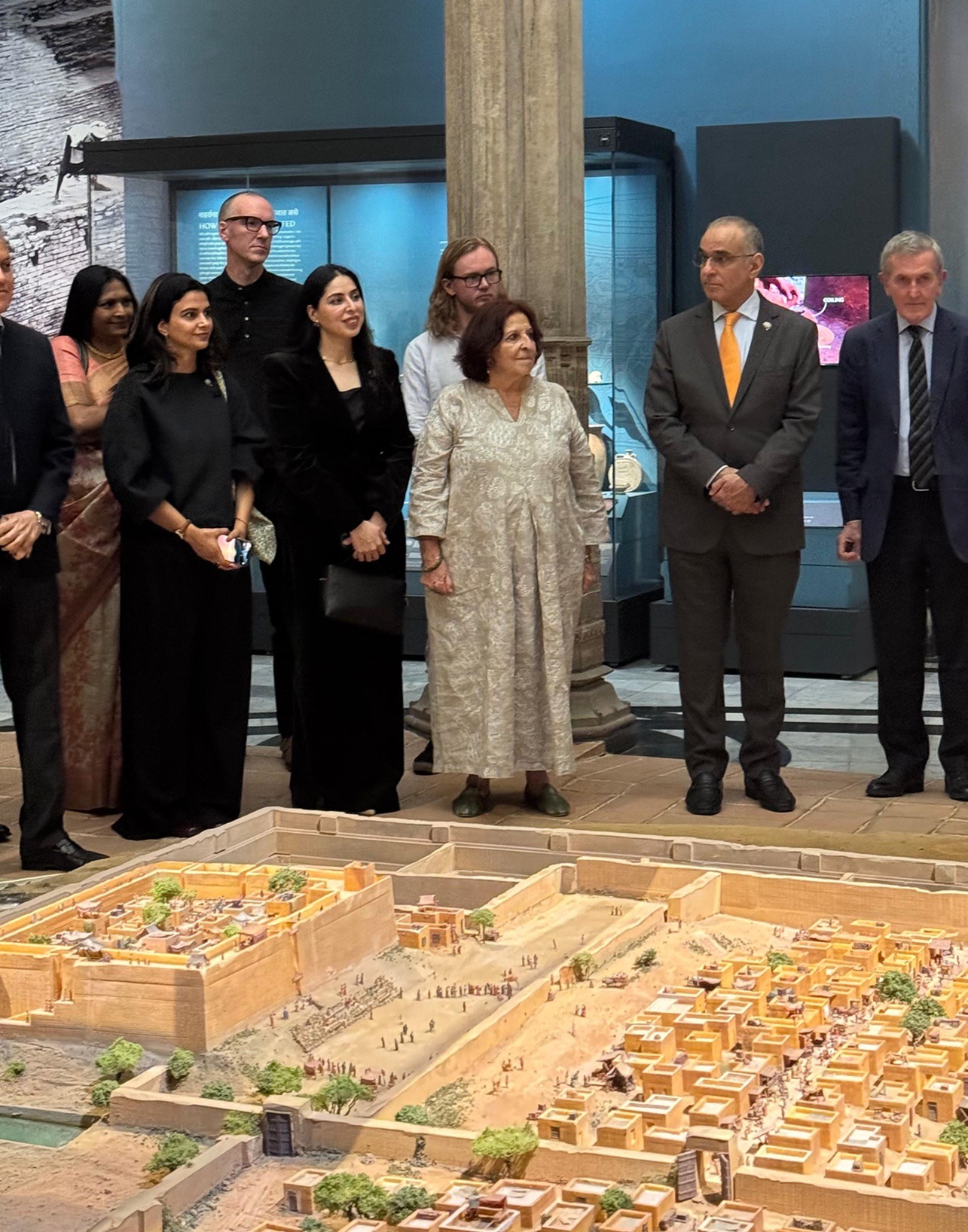
The Al-Sabah Archaeological Collection, under Kuwait’s Dar al-Athar al-Islamiyah, participated on Friday in the opening of the “Networks of the Past” gallery in Mumbai, India, reinforcing Kuwait’s growing presence on the global cultural stage.
The gallery, titled “Networks of the Past: A Study Gallery of India and the Ancient World,” is hosted by the Chhatrapati Shivaji Maharaj Vastu Sangrahalaya Museum and forms part of an international cultural initiative that reinterprets human history through the lens of interconnected civilizations.
In a statement to KUNA, Secretary-General of the National Council for Culture, Arts and Letters Dr. Mohammed Khaled Al-Jassar, who headed the Kuwaiti delegation, said the council was proud to support Dar al-Athar al-Islamiyah, describing it as a key ambassador of Kuwait’s cultural diplomacy worldwide.
He also expressed appreciation to Minister of Information and Culture and Minister of State for Youth Affairs Abdulrahman Al-Mutairi for supporting the preservation and promotion of Kuwait’s cultural heritage.
Al-Jassar noted that the Al-Sabah Collection has gained distinguished international recognition for its artistic and historical significance, praising the efforts of Dar al-Athar al-Islamiyah and its Director General Sheikha Hessa Sabah Al-Salem Al-Sabah for making rare artifacts available to leading global museums.
The exhibition traces pivotal stages in the development of human civilization, beginning with the Indus Valley, passing through ancient Egypt, Greece and China, and culminating in the cultural exchanges that shaped the ancient world.
Kuwait’s contribution is described in the exhibition’s official materials as part of an international network that includes institutions such as the British Museum, Berlin Museums and the Rietberg Museum in Zurich, following more than four years of collaboration.
Sheikha Hessa Sabah Al-Salem Al-Sabah emphasized that participation in the Mumbai exhibition reflects the vision of the late Sheikh Nasser Sabah Al-Ahmad Al-Sabah to share beauty, art and human heritage with the world through a strong international presence.
Kuwait’s contribution includes the loan of 11 rare artifacts from the Al-Sabah Collection, regarded as key material evidence of cultural exchange in the ancient world. Among them are a gilded tablet from the Oxus Valley dating to the 4th century BC, a silver dish from the Eastern Hellenistic period, and silver and glass vessels from eastern Iran spanning several historical eras.
The Kuwaiti delegation will also take part in a series of cultural and educational activities accompanying the exhibition, further strengthening Kuwait’s role in international cultural cooperation and dialogue.