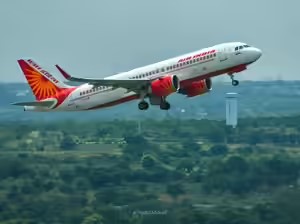
An internal Air India investigation has revealed “systemic failures” behind a serious safety breach in which one of the airline’s Airbus A320 aircraft operated eight commercial flights without the mandatory Airworthiness Review Certificate (ARC), a key document renewed annually by India’s aviation regulator after thorough safety checks.
According to the report, reviewed by Reuters, the aircraft — registered as VT-TQN — flew passengers between New Delhi, Bengaluru, Mumbai and Hyderabad on November 24 and 25 without the required permit.
The probe found that both engineers and pilots failed to verify the aircraft’s airworthiness documents, and that communication lapses prevented timely intervention.
“Critical information was not shared with relevant stakeholders, and opportunities for timely action were missed,” the report stated, adding that the incident underscored the need for urgent improvements in compliance culture, communication, and process discipline.
The findings were submitted to the Directorate General of Civil Aviation (DGCA) with a cover letter signed by Chief Operations Officer Captain Basil Kwauk.
The breach comes at a sensitive time for Air India, which has faced increasing regulatory scrutiny. The airline has previously been warned for operating aircraft without proper emergency equipment checks, delays in engine part replacements, and falsified compliance records.
In June, Air India suffered one of its worst disasters when a Boeing Dreamliner crashed shortly after takeoff, killing 260 people.
Following the November violation, Air India described the incident as “regrettable” and confirmed the suspension of several personnel.
The DGCA ordered the aircraft grounded and launched its own inquiry. Air India, owned by Tata Group and Singapore Airlines, said it had reported the lapse proactively and implemented immediate corrective measures to prevent recurrence.
The DGCA and Airbus did not respond to Reuters’ requests for comment.
The ARC is a critical annual safety certification, issued only after DGCA inspectors conduct detailed physical assessments ranging from cabin medical kits to exterior components such as tyres. Operating without it can draw penalties of up to 10 million rupees ($111,200).
The revelation comes amid broader turbulence in India’s aviation sector.
Market leader IndiGo recently cancelled thousands of flights nationwide, disrupting travel and sparking debate over the dominance of IndiGo and Air India, which jointly control more than 90% of the domestic market.