Kuwait remains a pillar of humanitarian support amid global funding crisis, says IOM
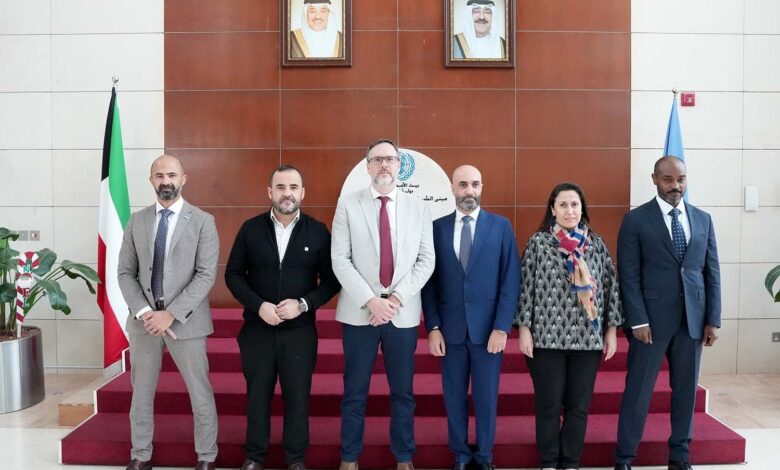
- Kuwait once again has demonstrated its steadfast humanitarian leadership as the International Organization for Migration (IOM) concluded its delegation visit, earning wide praise for its enduring support to UN agencies at a time when global crises are escalating and humanitarian funding is dwindling.
- Through strategic partnerships, generous contributions, and active engagement with international organizations, Kuwait continues to position itself as a pivotal actor in strengthening relief efforts, expanding cooperation, and addressing some of the world’s most urgent displacement and migration challenges.
The Times Kuwait Report
At a time when humanitarian crises are multiplying worldwide and international funding is declining, Kuwait continues to stand out as one of the most committed nations in humanitarian relief and support for UN agencies.
During the conclusion of the visit of the International Organization for Migration (IOM) delegation to Kuwait, the organization once again praised Kuwait’s central role in strengthening humanitarian response and enhancing regional and international partnerships.
Mazen AboulHosn, Head of the IOM Mission in Kuwait, offered a comprehensive overview of major global challenges and humanitarian needs during a press conference.
He highlighted the existing cooperation with Kuwait and future prospects for partnership, noting that the meetings held over the past two days were “excellent and successful by all standards.”
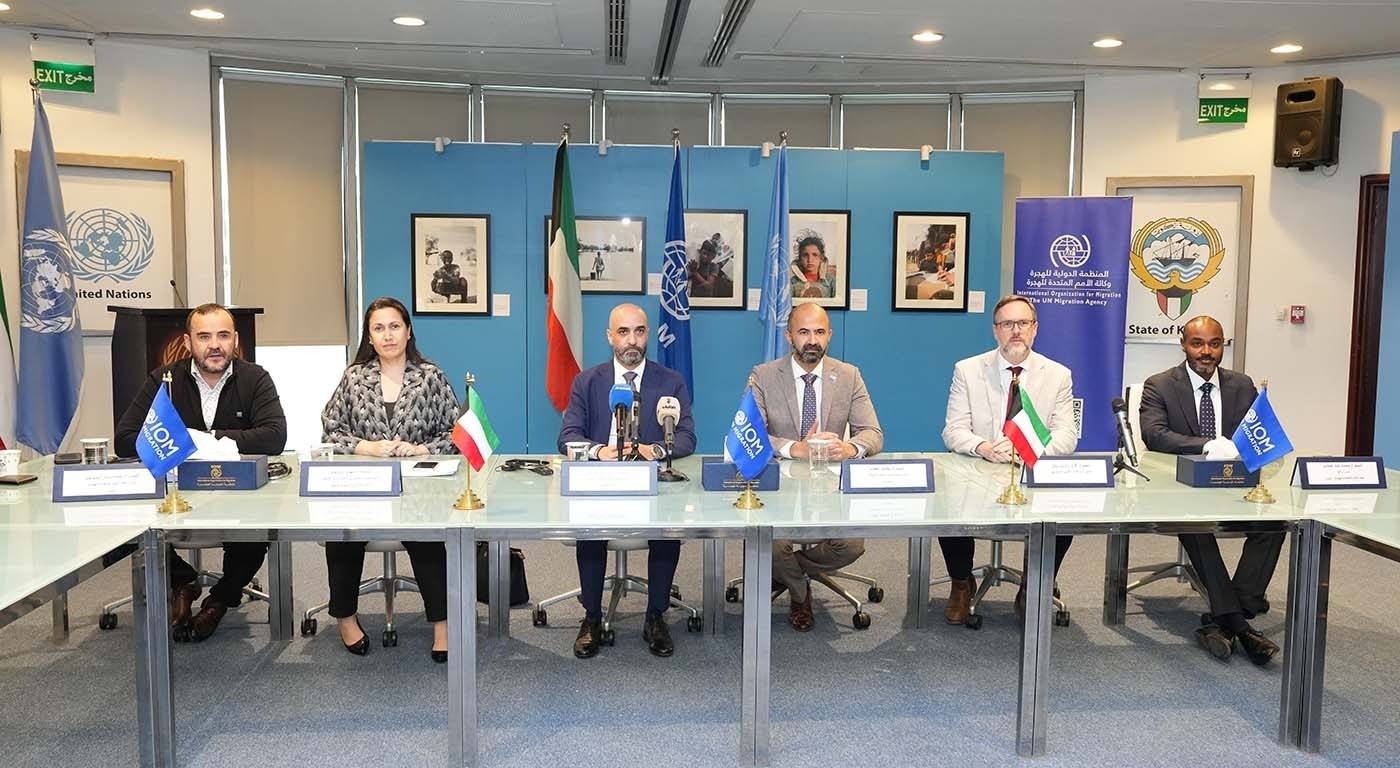
The visit provided an important platform to review the organization’s efforts worldwide and discuss joint humanitarian priorities with Kuwait, represented by the Ministry of Foreign Affairs, the Kuwait Fund for Development, and charity organizations.
Speaking at the United Nations House in Kuwait, Abu Al-Hassan expressed the organization’s appreciation for Kuwait’s “renewed and long-term support” to UN agencies, even as global crises intensify and humanitarian financing declines.
IOM Launches Global Appeal for 4.7 bln dollars
Abu AboulHosn emphasized that Kuwait is “one of the core supporters of IOM,” citing a series of agreements signed recently with Kuwaiti entities and ongoing efforts to develop new partnerships in Syria, Yemen, and Sudan to strengthen humanitarian action.
He announced the launch of IOM’s Global Appeal for 2026, covering programs in 172 countries. The organization aims to raise 4.1 billion dollars to assist 40 million people, although only 1.2 billion dollars has been secured so far.
IOM’s work is built around three pillars: meeting urgent humanitarian needs, strengthening community resilience and recovery, and linking migration with development.
Abu Al-Hassan stressed that the scale of current crises requires a collective effort involving governments, donors, the private sector, and civil society.
Palestine: Support for shelters amid rising needs
Regarding Palestine, AboulHosn noted that IOM continues, through its office in Jordan, to deliver aid to Gaza for the second consecutive year in coordination with all UN agencies. Efforts focus on supporting shelters and providing tents ahead of winter.
He warned that the “greatest challenge remains the gap between limited resources and expanding needs,” urging donors to increase support to address escalating humanitarian demands globally.
Sudan: One of the world’s largest internal displacement crises
Mohamed Rafat, Chief of IOM Mission in Sudan, described the country as experiencing “one of the largest internal displacement crises in the world.” Although the number of internally displaced people reached 12 million early in the year, it currently stands at 9.6 million.
He explained that the IOM delegation’s visit to Kuwait aimed to update partners—including the Kuwait Fund for Development, charitable associations, and the Red Crescent—on growing needs in shelter, health, and clean water, particularly in Darfur and around Al-Fashir.
Rafat highlighted IOM’s essential role in providing shelter solutions and supporting returning communities and expressed hope for expanding cooperation with Kuwait.
Syria: Gradual returns despite obstacles
Mohamed Abdel Azim, Head of Programs at the IOM Mission in Syria, described the Syrian situation as “a story of hope despite the challenges.” About 4 million internally displaced Syrians wish to return, and 1.7 million have already gone back.
He noted that major barriers remain, including destroyed housing, a weakened healthcare system, and damaged schools. IOM’s data unit has identified 10,000 local communities to guide targeted humanitarian interventions.
Sustainable return, he said, requires “effective support packages,” and international partnerships—including Kuwait’s—play a crucial role in expanding reintegration programs.
Gaza: Repeated displacement and growing needs
Carl Baker, Regional Response Coordinator for Gaza, outlined the difficulties faced during the past two years, including repeated displacement and a severe shortage of basic services.
IOM’s assistance focuses on providing tents, winter supplies, water, and hygiene materials while continuously monitoring evolving needs to ensure timely response.
Baker warned that the humanitarian situation “continues to deteriorate,” with needs far exceeding available resources, and reiterated IOM’s commitment to working with partners to mobilize additional funding and scale up assistance.