$40 billion Kuwait investment push highlights ‘real opportunities’ as Markaz unveils 2026 Market Vision
- Markaz unveils 2026 market vision amid strong global, regional, and technological shifts shaping investment strategies.
- Plans to inject 40 billion dinars into housing, logistics, energy, and oil and gas signal major long-term economic growth.
- Experts highlight rising opportunities in equities, private markets, real estate, and green fixed-income instruments across the region.
- Gulf markets continue to benefit from demographic expansion, regulatory reforms, and large-scale development projects.
- Markaz showcases major digital transformation advances, including AI-driven analytics and enhanced customer platforms.
Kuwait Financial Centre “Markaz” reaffirmed its position as one of the region’s leading institutions in asset management and investment banking when it hosted the annual conference titled “Markaz’s Future Outlook for 2026: Trends and Investment Opportunities” on December 8.
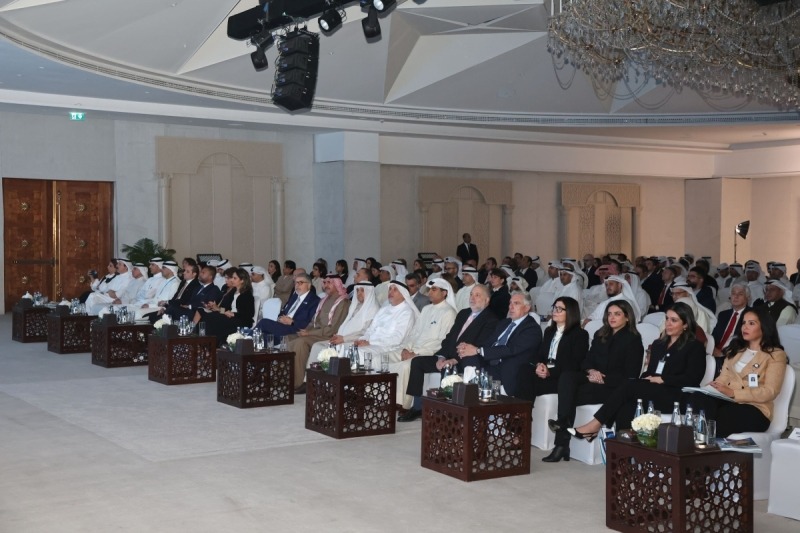
The event brought together Markaz experts and distinguished international speakers to analyze global and regional market developments and identify investment prospects for the coming year.
The conference forms part of Markaz’s ongoing efforts to support investors with data-driven insights and access to a wide range of investment opportunities.
In his opening remarks, Markaz CEO Ali Khalil highlighted the significant shifts reshaping the global economy, driven by technological innovation, policy changes, and geopolitical forces. He emphasized that economies capable of adapting to these transformations will be best positioned for growth, reports Al-Rai daily.
Khalil noted Kuwait’s increasing reform momentum, strengthened governance standards, and clearer investment priorities—factors that have contributed to a more resilient economic outlook and helped push the local market index above 25% growth.
Khalil added that while markets move in cycles, periods of volatility often present the most promising investment opportunities, making disciplined liquidity and risk management essential.
He stressed Kuwait’s strong fundamentals, including viable national projects, low public debt, and robust banking-sector lending capacity. He also pointed to Kuwait’s plans to invest 40 billion dinars in housing, logistics, energy, and oil and gas over the next decade—an investment expected to significantly boost overall economic activity.
From a wealth management perspective, Abdul Latif Al-Nisf, Managing Director of Wealth Management and Business Development, underlined the need for investment decisions grounded in a clear understanding of market shifts. He emphasized Markaz’s role in transforming these insights into practical financial solutions tailored to the long-term objectives of clients, families, and institutions.
The conference featured a key presentation by Giovanni Leonardo of Schroders, who outlined the global economic outlook for 2026. He noted that expectations of steady global growth, rising real wages, and moderating inflation support a positive view on equities.


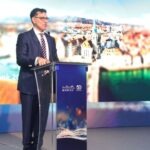
Leonardo maintained a neutral stance on fixed income, favoring short-term and government bonds, while identifying selective long-term opportunities in private markets, real estate, and alternative assets—especially as the cycle becomes more valuation-sensitive.
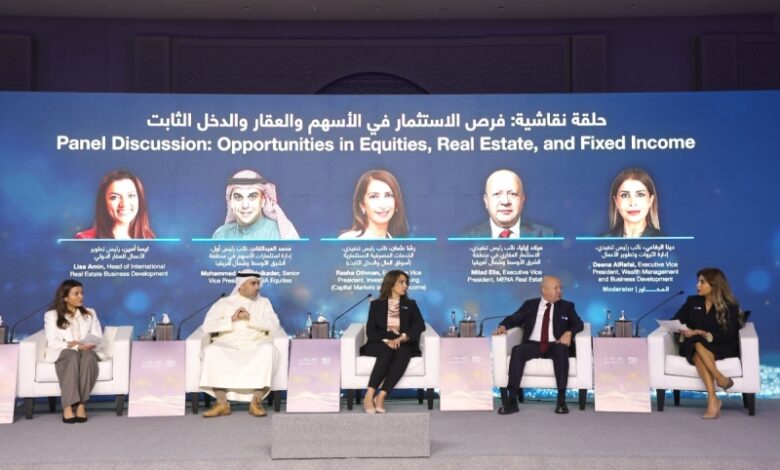
A panel titled “Opportunities in Equities, Real Estate, and Fixed Income”, moderated by Dina Al-Rifai, brought together Markaz specialists to examine emerging trends across multiple asset classes.
On fixed income, Rasha Othman highlighted strong regional market performance in 2025 and expected further interest-rate declines in 2026, noting growing demand for Gulf bonds and rising investor appetite for green issuance supported by global sustainability trends.
On the real estate front, Milad Elia, EVP of MENA Real Estate Investments, noted promising prospects in Kuwait’s housing segment and the logistics and warehouse sectors in both Kuwait and Saudi Arabia.
He stressed that institutional and family investors are increasingly restructuring their portfolios to strengthen resilience and unlock long-term value, making professional asset management more critical than ever.
Internationally, Lisa Amin of Markaz emphasized that global real estate markets are entering a more selective phase, where partnerships with top-tier developers and disciplined asset selection are crucial. Demand remains strong in logistics, residential, and specialized-use sectors across the U.S. and Europe, offering compelling opportunities amid ongoing repricing cycles.
Turning to Gulf equities, Mohammed Al-Abdulqader noted that regional markets continue to benefit from demographic growth, liquidity stability, regulatory reforms, major development projects, and expansion in housing and logistics. These structural tailwinds are generating attractive long-term opportunities across sectors such as finance, construction, industrials, and real estate.
The conference also explored new horizons in private markets during a session featuring leading global firms including Blackstone, BlackRock, Goldman Sachs, and Macquarie. T
he speakers emphasized the growing integration of private credit, private equity, infrastructure, and real assets into diversified portfolios. They noted that private markets—expected to surpass $32 trillion in assets by 2030—are increasingly essential for high-net-worth and institutional investors seeking stable returns, inflation hedging, and exposure to real-economy growth drivers.
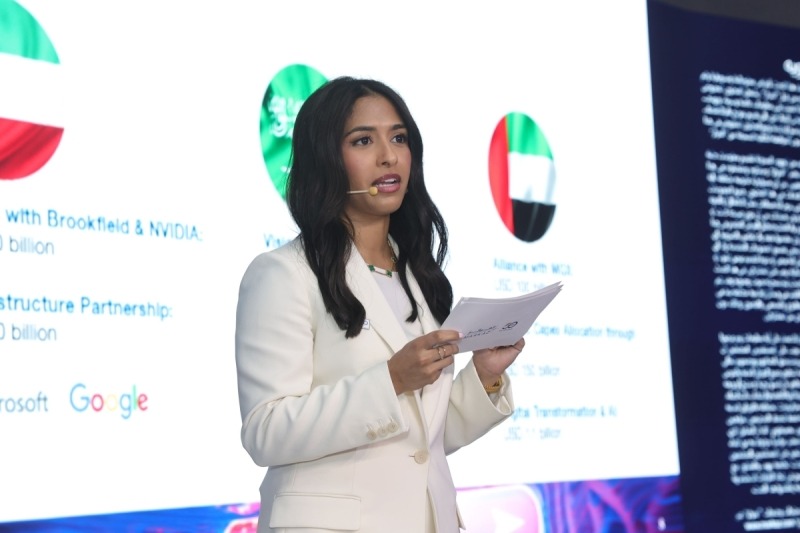
The event concluded with a presentation on Markaz’s digital transformation initiatives, showcasing new developments in data infrastructure, AI-powered analytics, enhanced customer platforms, and improved internal systems.
These advancements, part of a long-term strategic roadmap, aim to enhance transparency, operational efficiency, and the overall client experience as Markaz strengthens its leadership in the evolving financial landscape.