- Modi’s decision to personally receive Putin with an embrace on the tarmac—a breach of protocol typically reserved for the highest-profile diplomatic gestures—sent a clear signal that India intends to chart its own course in its relations with Moscow
- India and Russia signed several agreements covering migration, labor mobility, port access, shipping, health and food safety cooperation.
- Even as New Delhi attempts to balance Western expectations, Modi reiterated that India had “advocated for peace from the beginning” on Ukraine and welcomed all “efforts for a peaceful and lasting resolution.”
Russian President Vladimir Putin concluded a highly symbolic two-day visit to New Delhi on Friday, using the occasion to reaffirm Moscow’s commitment to supplying India with uninterrupted oil, gas, and coal.
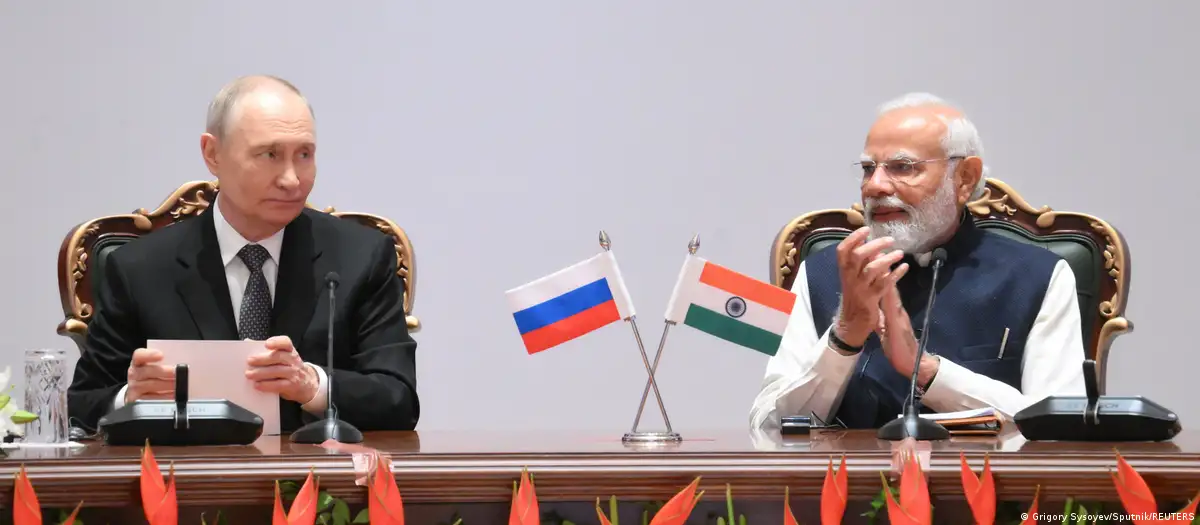
Standing alongside Indian Prime Minister Narendra Modi, Putin declared Russia a “reliable supplier” for India’s rapidly expanding energy needs. The leaders emphasized that their partnership has remained “steady like the North Star” across eight decades of shifting geopolitical tides.
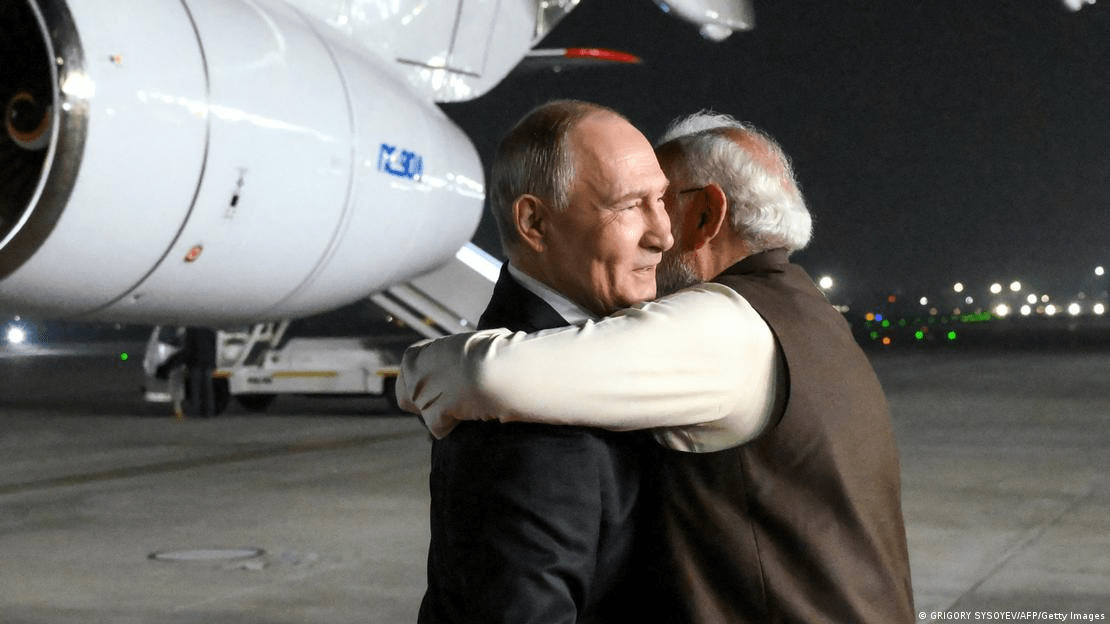
Modi’s decision to personally receive Putin with an embrace on the tarmac—a breach of protocol typically reserved for the highest-profile diplomatic gestures—sent a clear signal that India intends to chart its own course in its relations with Moscow, according to DW.COM
The visit, Putin’s first since Russia’s 2022 invasion of Ukraine, came at a time when the West is intensifying pressure on New Delhi, with Washington imposing trade tariffs to deter Indian purchases of Russian oil and European powers urging India to play a more active diplomatic role in ending the conflict.
That pressure became especially visible ahead of the visit, when envoys from the UK, France, and Germany published a rare joint op-ed in an Indian newspaper criticizing Russia for prolonging the war and calling for accountability. Yet the tone in New Delhi was markedly different.
India and Russia signed several agreements covering migration, labor mobility, port access, shipping, and health and food safety cooperation.
Modi announced that negotiations for a free-trade pact with the Russia-led Eurasian Economic Union were moving forward, and the Kremlin signaled that alternative payment systems to bypass Western sanctions were a key topic of discussion.
Putin reported that bilateral trade grew 12% last year and is expected to surpass $100 billion soon, while noting that 96% of transactions are now conducted in rupees and rubles. India, for its part, is eager to expand its exports of pharmaceuticals, food products, and consumer goods to Russia.
Even as New Delhi attempts to balance Western expectations, Modi reiterated that India had “advocated for peace from the beginning” on Ukraine and welcomed all “efforts for a peaceful and lasting resolution.”
Analysts say India’s calibrated position reflects its long-standing pursuit of “strategic autonomy,” balancing Russia as a crucial defense and energy partner while maintaining the US and Europe as key economic and technology partners.
Rajan Kumar of Jawaharlal Nehru University argued that Washington is unlikely to oppose the summit too aggressively, given that the US itself is quietly exploring back channels to shape a potential settlement in Ukraine.
However, he cautioned that if diplomatic efforts fail, India may face stronger Western pressure, including potential sanctions targeting its ties with Moscow.
Other experts believe India must continue walking this tightrope. Foreign policy scholar C. Raja Mohan contends that New Delhi should sustain a strong energy and defense partnership with Russia while simultaneously deepening trade and investment relations with the US and EU.
With negotiations over Ukraine potentially reshaping the geopolitical landscape, Mohan argues that India must reinforce ties with all three major powers during a rare moment of global realignment.
Despite India’s assertiveness, Western measures are having an impact. Data from October 2025 show India has reduced imports of Russian oil by 38%, shifting its purchases toward suppliers in the Middle East and Africa.
The EU also retains leverage through its still-unfinalized free trade agreement with India, though analysts say Brussels is constrained by its own economic vulnerabilities and the need to offset tariffs imposed by the Trump administration. As a result, the EU is likely to separate trade considerations from its security concerns.
Former Indian diplomat Ajay Bisaria noted that Putin’s visit forms part of a long-standing annual summit tradition spanning a quarter century, suggesting continuity rather than rupture. While the US, EU, and UK will monitor the visit closely, he predicted a cautious and pragmatic response.
As JNU academic Amitabh Mattoo put it, Western capitals should instead reflect on “why they lost India”—arguing that while the West allowed its relationship with New Delhi to drift, Russia remained a steadfast partner and invested consistently in the “special and privileged” India-Russia relationship.