Bahrain Summit convenes at a critical moment for regional stability
. . . amid accelerating regional challenges, with GCC leaders seeking to strengthen stability, deepen cooperation, and advance a unified vision for security, development, and strategic integration across the Middle East -- GCC Secretary-General Jassim Al-Budaiwi
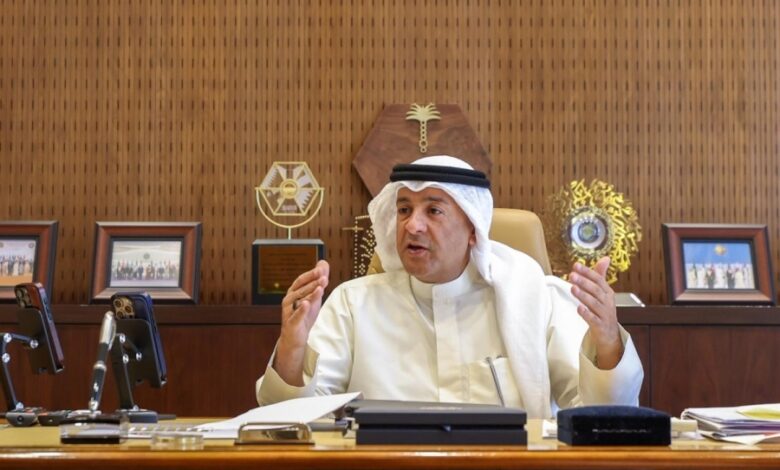
- Summit continues the cooperative path laid down by the founding leaders of the GCC states, and reinforces the Council’s status as one of the region’s most successful models of integration.
- GCC progress reflects the wise political vision of its leaders, who continue to guide member states toward stability, development, and unified positions during regional and international crises
GCC Secretary-General Jassim Al-Budaiwi affirmed that the 46th Gulf Summit, which is being held in the Kingdom of Bahrain, comes at a defining moment for the region as the Middle East faces fast-moving and serious developments.
He emphasized that the summit continues the cooperative path laid down by the founding leaders of the GCC states, and reinforces the Council’s status as one of the region’s most successful models of integration.
Speaking to KUNA ahead of the summit, Al-Budaiwi noted that the GCC’s progress reflects the wise political vision of its leaders, who continue to guide member states toward stability, development, and unified positions during regional and international crises.
Al-Budaiwi said the leaders’ agenda includes major political and security issues, including the repercussions of the Israeli occupation’s aggression against the Palestinian people, developments in the Iranian nuclear file, maritime security in the Gulf and the Red Sea, and wider regional and international concerns.
He stressed adherence to international law, respect for state sovereignty, non-interference in internal affairs, and resolving disputes peacefully — principles that remain central to the GCC’s unified positions.
The Palestinian issue, he said, will remain a top priority, with continued efforts to protect civilians in Gaza and achieve a comprehensive solution based on the Arab Peace Initiative and the two-state framework.
Highlighting progress across the region, Al-Budaiwi said the GCC countries are advancing rapidly toward achieving the UN Sustainable Development Goals 2030.
Recent data show, he said, that GCC states have achieved between 80% and 90% of key health and education indicators, along with significant improvements in social protection, environmental performance, and quality of life.
He added that the Council’s economic reform efforts continue to strengthen non-oil sectors, which now contribute about 76% of the region’s GDP—nearly USD 1.7 trillion in 2024—while maintaining oil’s strategic role in global energy security.
On the GCC Railway Project, Al-Budaiwi described it as one of the most important joint strategic projects, with implementation progressing in several member states.
The Council aims to fully operate the network by December 2030, with passenger numbers projected to rise from 6 million in 2030 to 8 million by 2045.
He also highlighted the “One Point Travel” system, which will allow GCC citizens and residents to move between member states without repeated identity checks upon arrival—reducing waiting times and easing airport congestion.
Al-Budaiwi revealed that the GCC is negotiating free trade agreements with eight countries — including the United Kingdom, Turkey, Malaysia, Japan, and South Korea — while exploring additional agreements with ASEAN, Vietnam, and Georgia.
Emphasizing the importance of youth empowerment, he said young people remain the region’s largest productive force, essential for building knowledge-based and digital economies.
On Syria, he reiterated the GCC’s commitment to supporting stability and sovereignty, rejecting foreign interference, and aiding Syria politically, economically, and humanitarianly.
Regarding Lebanon, he stressed the need for reforms, restoring state authority, confining weapons to legitimate state institutions, and ensuring the country does not become a source of instability.
Al-Budaiwi also underscored the GCC’s insistence on participating in all international negotiations on Iran’s nuclear program, stressing the need for a comprehensive agreement that addresses the security concerns of Gulf states.