The H-1B visa has long been a gateway for highly skilled workers, particularly from India and China, to enter the United States tech industry. For decades, the program has supplied Silicon Valley and other hubs with critical talent in software engineering, data science, and information technology. But a recent move by US President Donald Trump has cast serious doubt on the program’s future and its accessibility.
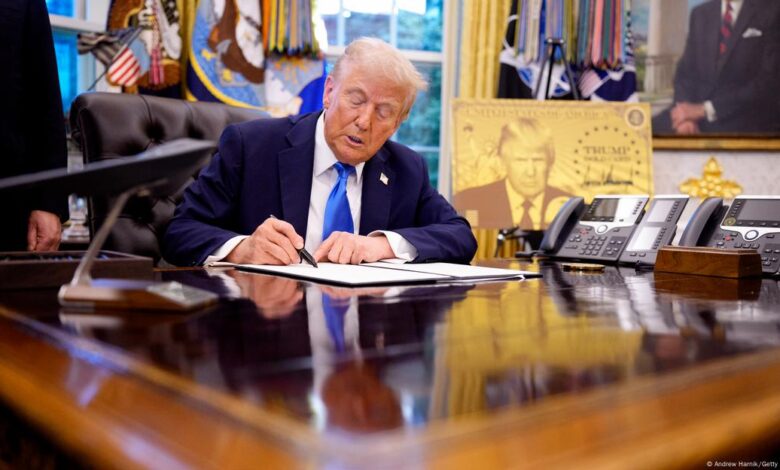
Trump announced that applications for new H-1B visas would carry a staggering $100,000 fee. The proposal has immediately unsettled thousands of prospective applicants and triggered debates about the future of global tech talent flows. For students like Aditi Menon, a young engineering graduate from Madhya Pradesh, the change has upended carefully laid plans to study and eventually work in the United States.
The H-1B program has traditionally offered 85,000 visas annually through a lottery system, with 20,000 of those reserved for foreign graduates of US universities. Indian applicants make up the overwhelming majority of beneficiaries—over 70%—followed by Chinese professionals at around 11%. Tech companies such as Amazon, Microsoft, and Meta consistently top the list of beneficiaries, collectively hiring tens of thousands of H-1B workers every year.
Until now, visa costs were manageable. Applicants and their sponsoring employers paid between $2,000 and $5,000 in government fees, depending on the case. Companies usually bore these costs, making sponsorship a realistic option for firms looking to fill specialized positions. By contrast, the $100,000 flat fee would represent a seismic shift, especially for smaller companies that rely on global talent but lack the financial muscle of giants like Amazon or Google.
Trump defended the fee increase as a measure to push employers to hire more Americans. But critics argue it risks cutting off the very pipeline of international expertise that has historically fueled America’s technology dominance.
The uncertainty is already reshaping student decisions. Menon herself is considering alternatives such as Canada and Germany, countries that not only provide strong graduate education but also offer clearer pathways to poststudy work opportunities. Immigration lawyers in the US confirm that panic is spreading. Cecilia Hu, a New York–based attorney, says many of her Chinese clients are scrambling to explore options elsewhere.
Hu points out that the sudden shift in policy could inadvertently strengthen China’s own bid to attract global tech workers. Beijing recently introduced a new “K visa” aimed at welcoming young professionals in science and technology, effective this October. “The US risks pushing away a large pool of talented individuals, and China may end up being a major beneficiary,” she observed.
India also stands to feel the ripple effects. Former ambassador Meera Shankar warned that the fee essentially dismantles the H-1B program as it exists today. She predicted that Indian students will increasingly look toward other destinations for higher education and career opportunities. For Indian IT companies, she said, the shift will likely accelerate investment in automation, artificial intelligence, and offshore delivery centers.
Industry experts echo these concerns. Rising immigration costs could eat into the margins of companies that previously relied on a steady stream of H-1B workers, particularly Indian outsourcing firms. Many are already scaling back their dependence on foreign workers in favor of hiring more Americans. NASSCOM, India’s largest tech industry association, said its members are spending more than $1 billion annually on upskilling and local recruitment in the US, while steadily increasing local hires.
At the same time, some warn that cutting off international talent may weaken America’s innovation edge. Ram Krishnan, a Boston-based entrepreneur, described the H-1B pathway as a “bridge” that has allowed Indian students to integrate into the US innovation ecosystem. He pointed to the example of Vinod Khosla, who co-founded Sun Microsystems, and more recently Aravind Srinivas, co-founder of Perplexity AI, now valued at nearly $20 billion. Both stories, he argues, show how immigrant talent has powered transformational growth in the US economy.
Krishnan fears that raising barriers will make such success stories rarer. “Without the H-1B pathway, many of the companies that define global technology today might never have existed,” he said. From venture capital to AI startups, immigrant founders and workers have contributed disproportionately to US innovation.
What remains clear is that the debate over H-1B visas is more than a policy dispute—it is a battle over America’s identity as a magnet for global talent. For students in India and China, the uncertainty is already reshaping their career maps. For US tech companies, the prospect of losing easy access to skilled international labor is forcing them to rethink hiring strategies. And for policymakers, the question looms: will closing this door ultimately protect American jobs, or weaken the very ecosystem that has long set the US apart?
Follow The Times Kuwait on
X, Instagram and Facebook for the latest news updates