After weeks of alternating between threats of escalation and signals of de-escalation, the US president says he will reassess military options after January 1. The announcement comes amid Republican electoral setbacks, renewed congressional resistance to the war and continuing uncertainty over the prospects for a diplomatic settlement with Tehran.
US President Donald Trump has indicated that any decision on renewed military strikes against Iran will be deferred until after January 1, signalling a possible pause in Washington’s military calculations as the eight-month conflict remains unresolved and diplomatic efforts continue to face uncertainty.
In separate interviews with Reuters, Fox News, Axios and Israel’s News 12 on Thursday, Trump suggested he was in no hurry to determine the next course of action against Tehran, moving away from earlier indications that developments surrounding the November 3 congressional elections could influence the timing of a decision.
Asked by Reuters whether the United States was considering fresh strikes against Iran, Trump said: “Well, I’ll talk to you about it after the beginning of the year.”
In another interview broadcast by Fox News, he reiterated the revised timeline, saying: “We’ll see what happens after January 1.” He also told Axios and News 12 that he was “not rushing to make any decisions on Iran”.
The comments reflect the uncertainty surrounding the administration’s approach to the conflict, with Trump having alternated in recent weeks between warnings of further military escalation and suggestions that hostilities could be brought to an end.
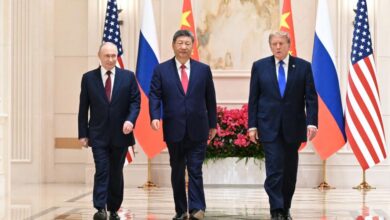
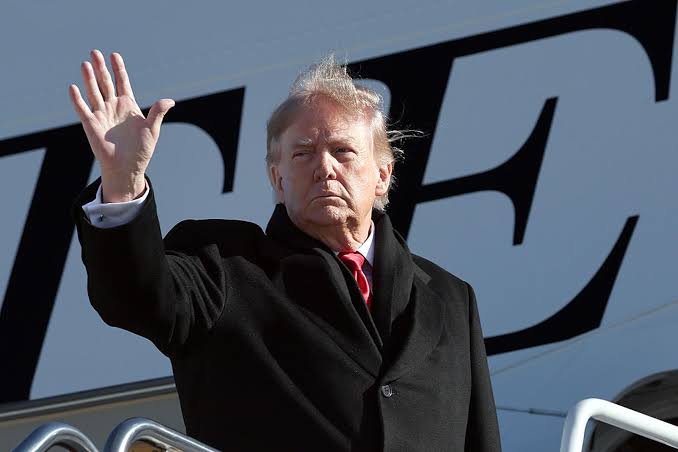
The US president made the remarks aboard his aircraft while returning to Washington from China, where he attended a high-profile summit with Chinese President Xi Jinping and Russian President Vladimir Putin.
His latest position marks a shift from statements made in the weeks preceding the November 3 congressional elections, when Trump repeatedly suggested that Iran might become more willing to negotiate an agreement after the US vote.
The political backdrop has since changed significantly, with Republicans suffering losses in both chambers of Congress. Nevertheless, the administration has maintained that its economic pressure campaign and naval blockade against Iran are producing results.
The US Senate, where Republicans retain control until January 3, again rejected on Thursday a measure intended to restrict the administration’s authority to continue the war. Trump acknowledged that the Iran conflict had played a role in the Republicans’ electoral setbacks but maintained that he would not have changed his approach.
He has, however, indicated that fresh military strikes would be put on hold for the time being. The war has also exposed differences within the Republican leadership. Vice President JD Vance, widely viewed as a potential contender in the 2028 presidential election, publicly distanced himself from the conflict, attributing the party’s electoral losses partly to the war. Trump subsequently redirected Vance away from Iran-related diplomatic efforts and towards domestic priorities.
Meanwhile, the joint statement issued following Trump’s summit with Xi and Putin made no reference to the Iran conflict, despite the wider geopolitical implications of the continuing confrontation.
Trump plays down reported security threat
Separately, Trump sought to downplay concerns over a CNN report alleging that Iran was considering detonating a so-called dirty bomb in Washington. Such a device uses conventional explosives to disperse radioactive material.
Asked whether residents of the US capital should be concerned, Trump responded, “I don’t think so”, although he subsequently claimed that there were indications Iran was examining chemical and biological weapons capabilities.
“There is indication that Iran is looking at gases, looking at bio, because we’ve shut them out with the nuclear. Nuclear is much harder. And they’re looking at gas and … biological weapons — not nice — and other things,” he said, without providing supporting details.
Iran’s Foreign Ministry rejected the American allegations, describing claims that Tehran was developing chemical and biological weapons as an attempt to generate fear and create justification for military action. Tehran had earlier dismissed the CNN report as baseless.
The United States, Israel and several Western countries have long accused Iran of pursuing nuclear weapons capabilities, an allegation Tehran consistently denies. Preventing Iran from developing nuclear weapons was among the principal justifications cited by Trump when the United States and Israel launched strikes against the country in February.
The debate over renewed military action has continued in Washington. Mossad chief David Barnea reportedly advocated resuming joint US-Israeli strikes during a visit to the United States earlier this month, according to Reuters.
US Secretary of State Marco Rubio, however, has said he does not believe there is an imminent threat to the American capital. Trump’s decision to defer a fresh assessment until after January 1 leaves the future direction of US policy towards Iran uncertain, with military pressure, economic sanctions and the prospect of renewed negotiations continuing to shape the confrontation.