


Be more united politically.
And take a broader approach globally.
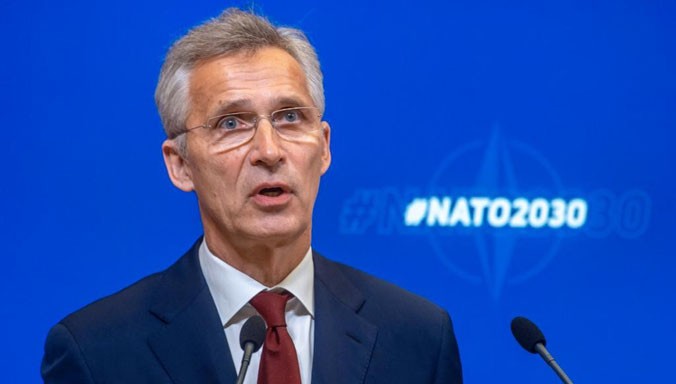
In response to a query if NATO see China as the new enemy? Jens Stoltenberg (NATO Secretary General) responded, “NATO does not see China as the new enemy or an adversary. But what we see is that the rise of China is fundamentally changing the global balance of power and the NATO leaders, heads of state and government, when they met in London in December, they, for the first time in NATO’s history, agreed that NATO has to address the consequences, the security consequences, of the rise of China.”
He added, “There are some opportunities, because the economic growth of China has fuelled economic growth in our part of the world, and it has helped to lift hundreds of millions of people out of poverty. But at the same time, we see that the fact that China soon will have the biggest economy in the world, they already have the second largest defence budget. They are investing heavily in modern military capabilities, including missiles that can reach all NATO Allied countries. They’re coming closer to us in cyberspace. We see them in the Arctic, in Africa. We see them investing in our critical infrastructure. And they are working more and more together with Russia. All of this has a security consequence for NATO Allies. And therefore, we need to be able to respond to that, to address that. And we need to do that by forging NATO as a stronger political Alliance. We need to do that, we’re working together with partners, not least in the Asia Pacific, including Australia, Japan, South Korea, New Zealand, which are very close and like-minded partners to NATO.
So this was in a message coming from the leaders last December. And now we are following up on that when we now address NATO 2030 and the reflection process.”
Providing an answer if this new direction would suggest a closer collaboration with the European Union?, Mr. Stoltenberg revealed, “I think the most fundamental answer to that question is that peace matters, especially for young people, because it’s only by providing peace and freedom, which is the core responsibility of NATO, that young people can decide themselves what kind of life they would like to live. Job, education, but also to address all the other important issues we are faced with, like climate change or, now, the fight against racism. Without peace, we will fail in all those efforts. So peace and freedom is so fundamental for everything else we do. But peace has not been a normal thing in Europe. Actually, Europe, NATO Allies, were ravaged by war for centuries. So the most important thing for young people is to make sure that they can take peace as granted as I’ve been able to take. And the only way to make sure that that happens is that we continue to have NATO as a strong alliance, preserving peace and freedom.”
On the query if it is time for a new Strategic Concept for NATO to address cyberspace and hybrid threats, with the potential disruptive role of technology in the 2030 horizon? Do we need and should we have a new Strategic Concept?
Jens Stoltenberg answered, “For me, the most important thing is that we continue to change and adapt. One of the main reasons why NATO is the most successful alliance in history is that we have been able to change every time the world has changed. And we need to continue to change, because the world continues to change.
And the aim of NATO 2030 is to make sure that happens. And I think that we have seen that in the Strategic Concept NATO has today, we have identified three core tasks: collective defence; crisis management, including fighting terrorism; and cooperative security, so, working with the partners all around the world.”
In December 2019, NATO Leaders invited the Secretary General to lead a forward-looking reflection process to strengthen NATO’s political dimension. To support him, Mr Stoltenberg has appointed a group of ten experts. Over the coming months, NATO will engage with Allies, public and private sector experts, and young leaders to provide fresh thinking on how to make sure NATO remains ready today to face tomorrow’s challenges.