


There are plenty of potions, practices and advice on how people can live longer by staying mentally sharp as they get older. But now new research suggests that less may be more when it comes to your brain activity.
After an in-depth analysis of donated brain tissue from people who died at ages from 60 to more than 100, researchers from Harvard Medical School say that the longest-lived people had lower levels of genes related to neural activity. The findings suggest that a calm brain with less neural activity could lead to a longer life.
A protein labeled REST, which suppresses neural activity was found to be associated with neural activity and mortality. In experiments on worms and mammals, boosting REST led to lower neural activity and longer lifespans while suppressing it did the opposite.
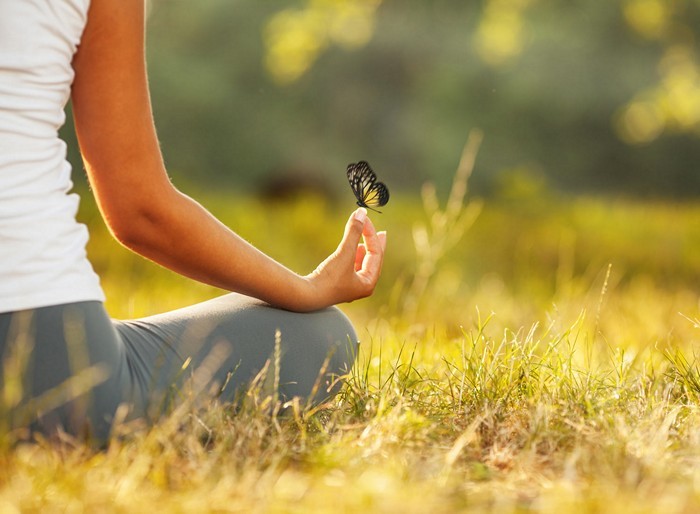
The study shows that daily periods of slowed activity, whether spent in meditation, unitasking, or simply being still or sleeping are as important for brain health and longevity as activity and exercise. Although it weighs only about one-seventieth of our body weight, the brain consumes nearly a third of the energy produced by the body. Researchers now contend that when it comes to our brains and our bodies, less is more and that rest is best.
So how do you go about calming the brain in a world that seems to be always on the run. Here are some steps you could emulate in your life to quieten things down, for a while at least.
Mindfulness: A great way to lower stress and heighten mindfulness is to be more aware of your body. A few gentle stretches and awareness of where you are holding your tension allows you to acknowledge your body and realize what really is going on
Another exercise in mindfulness is to establish a habit that sets events into motion. Something as simple as touching a doorknob before meeting with a person creates a moment to focus on why they are doing what they are doing and how they are going to connect with the person. This habit is a great way to be present with a person you are engaging with.
Meditation: This works hand-in-hand with mindfulness because it provides a helpful barometer of one’s mental state, allowing you to see where your mind is at. Even 5 or 10 minutes a day of meditation can make a difference in bringing mindfulness to your activity during the whole day.
Listen: Often while engaged in a discussion it is quite easy to stop listening to others while you wait for your chance to speak or respond to the speaker. One way to recognize that you are only hearing but not listening to someone is to watch your thoughts. Thinking about what you are thinking, will provide you with the wake-up call to be present and not miss the moment; to actively listen to what someone else is saying.
Downtime: A simple exercise to show you whether you are truly living the life you want to live is to create two charts: one to show how you would like to divide the 24 hours of your day, and one to show how you actually spend your time. While the breakdown will likely include time away from the office or work, it often does not include any time that is truly free downtime. What is designated as free time is usually given over to exercising, reading or spending quality time with family. Intentionally setting out some really ‘free’, unstructured time for yourself every day can help.
Recognize burnout: Many people do not accept burnout until they are fully burnt out. Recognizing burnout early can help with re-assessing and re-prioritizing. Symptoms of burning out can include emotional exhaustion, lack of a sense of personal accomplishment, a lack of excitement, and a pervasive mood of irritation. Things that were not a big deal in the past suddenly seems a big issue. That is the point where you want to step back before you get to the point where you are really not effective at your job, nor effective at living the life that you want to live. Then it becomes a lose-lose situation.
Seek mentors: It is always good to learn from the best. If you cannot physically attend relaxation courses, read up on mindfulness and meditation. Look for positive examples from people who have managed to find the right balance between their job and their life.